Heuristic Evaluation
The heuristic evaluation was conducted on the initial prototype. We utilized Nielsen's 10 Usability Heuristics. After rigorous testing, we identified four primary usability issues and minor bugs which were addressed prior to user testing.

Evaluation Matrix
Detailed breakdown of severity ratings.
Hypothesis & Testable Questions
Hypothesis 1: Core Functionality
Hypothesis: Users can successfully create a valid workout plan using the app without external help.
Testable Question: Can participants create a workout plan that meets specific criteria (strength, cardio, stretch) using the provided tools?
Task: “Create a workout loadout called 'Fitness' for today with 3 exercises: 1 strength, 1 cardio, and 1 stretching exercise.”
Hypothesis 2: Workflow Preference
Hypothesis: Users perceive API selection as lower effort and more enjoyable than manual entry.
Testable Question: Which method (Custom Entry vs. API Search) do users prefer and why?
Task: “Add one exercise via 'Custom' and one via 'API Search'. Check the exercises on the Home Screen.”
Test Methodology
Methods & Tools
The usability test was conducted using in-person sessions.
- Protocol: Think-Aloud Protocol.
- Questionnaires: Single Ease Question (SEQ) after each task, System Usability Scale (SUS) at the end.
Data Collection (Dependent Variables)
We collected the following metrics to validate our hypotheses:
- Satisfaction: SEQ ratings (1-7) and final SUS score.
- Preference: Binary choice (API vs. Manual) + qualitative reasoning.
User Test Results
Test Subjects
Total Participants 5: 5
- Age Range:[18 - 30]
- Background:[students]
Quantitative Evaluation Summary
Below is the summary of the performance metrics collected during the sessions.
| Metric | Result | Notes |
|---|---|---|
| Average SEQ (Task 1) | [6.6] | Perceived as "Easy". |
| Average SEQ (Task 2) | [5.2] | Perceived as "Somewhat Easy". |
| Average SUS Score | 90.5 | Grade: A (Excellent). |
| API Preference | [3/5] | Preferred API over custom entry. |
SUS scores
Boxplot of the SUS score
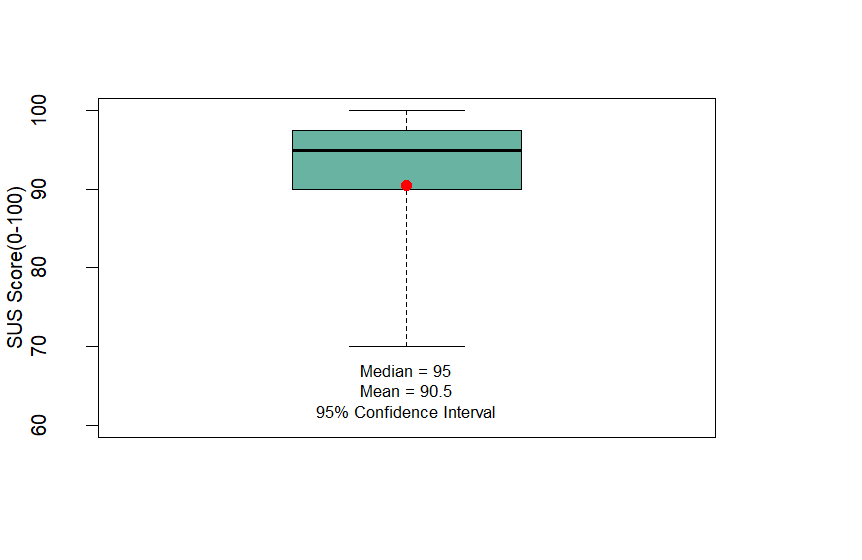
SUS results
The SUS results where really good with an average of 90.5, there was one outlier however who only rated 70 points which was alarming, that users main feedback was that it was annoying that the first loadout you create isn't immediatly active and it took him a while to figure that out, we fixed that of course.
Familiarity scale
Row Plot of Users Familiarity with similar products
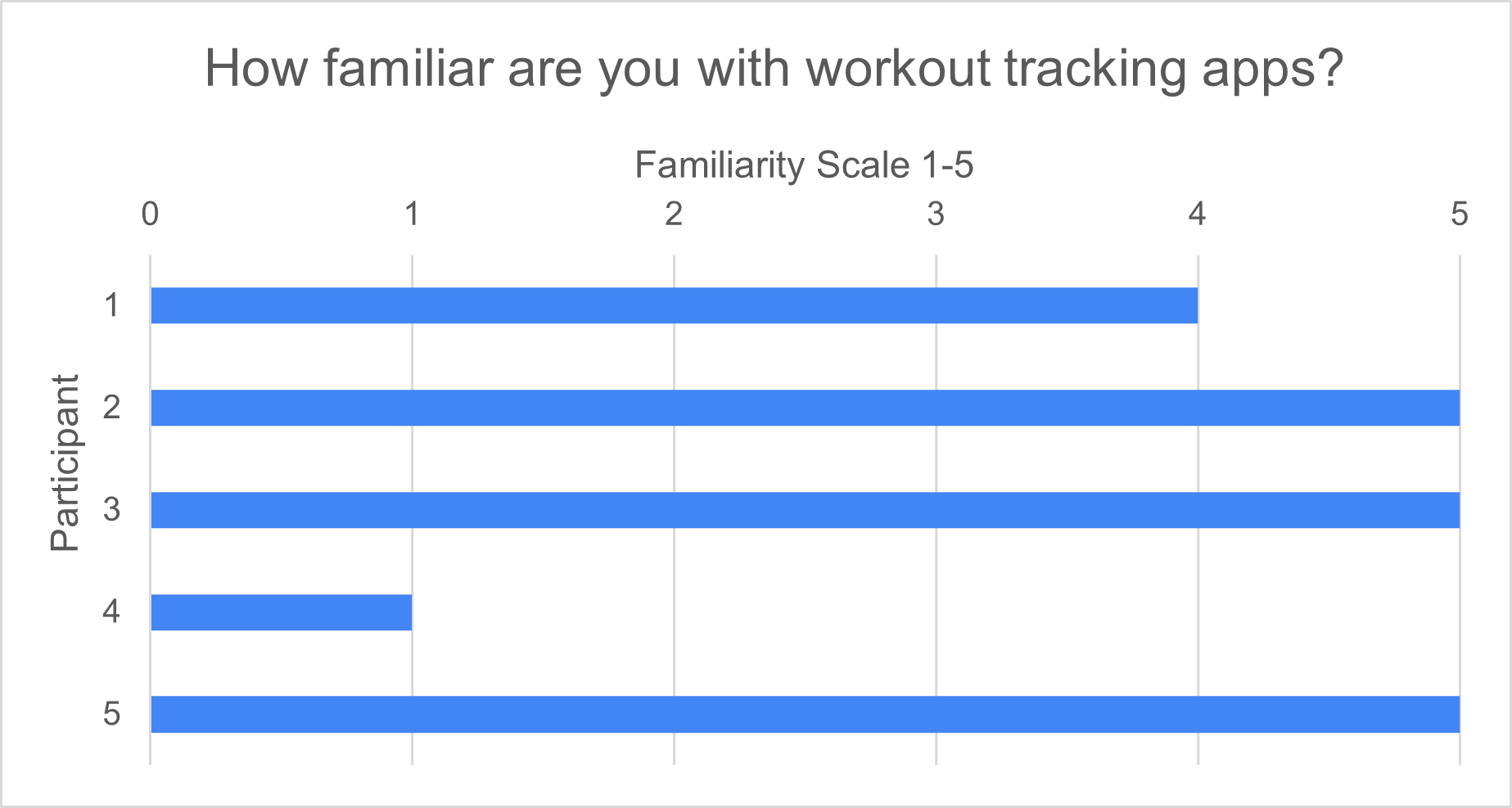
Results
It turned out that a majority of our participants already use workout trackers, which is a good thing, because they might have a higher standard.
Task 1 SEQ results
Column Plot of Task 1 SEQs
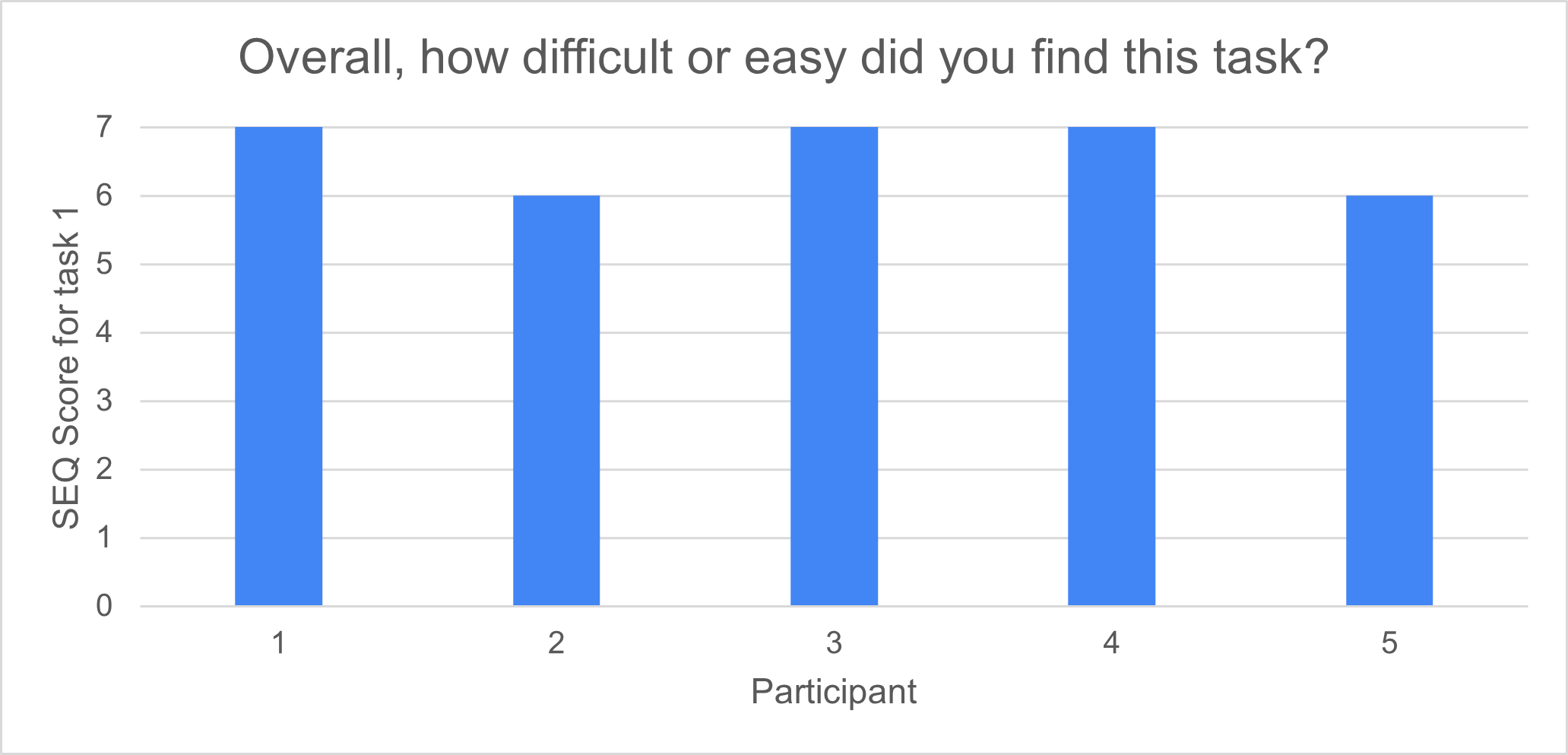
Results(very difficult = 0, very easy = 7)
No one seemed to struggle with the task: Create a workout loadout called "Fitness" for today with 3 exercises: The categories should be 1 strength, 1 cardio, and 1 stretching exercise
Task 2 SEQ results
Column Plot of Task 2 SEQs
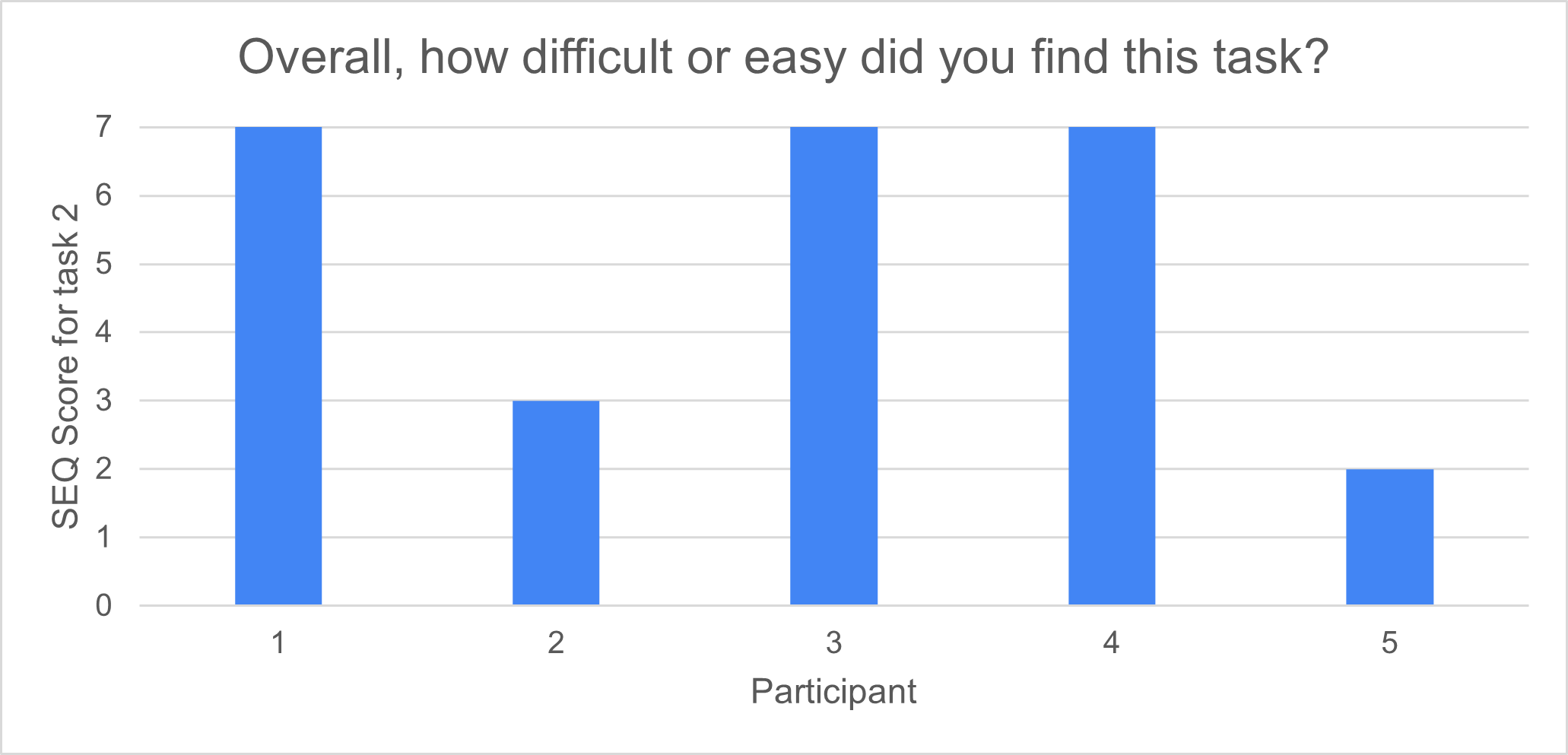
Results(very difficult = 0, very easy = 7)
This task was a little harder on two participants: Add one exercise via Custom and one via API. After that check all the exercises on the Home Screen.
Qualitative Feedback
Relevant Feedback
Users liked the simplicity and design, as well as the Api integration to create pre-established exercises One thing the users would want to change is the workout activation, when first creating a workout loadout the app does not make it clear, what the user should do to see their newly created exercises on the home screen. This led to confusion and some users got stuck during this step.
System Updates (Post-Test)
Based on the feedback received, the following updates were pushed to the application:
- Auto-activaton for first Workout When the user creates a workout for the first time, or no other loadout is present, it will be automatically set to activate. So the users can immediately see all their created exercises for the current day on the homescreen.